Why Africa Looks Smaller Than It Really Is on World Maps – and Why Togo Wants That Changed
In an age where accurate representation and perceptions of global development are paramount, the issue of map distortion has resurfaced as a conversation of critical importance. Most maps, particularly the widely used Mercator projection, portray Africa as significantly smaller than its true size, which is not only misleading but also perpetuates historical stereotypes and underestimates the continent’s vast potential. As discussions on geographical representation gain momentum, Togo has emerged as a vocal advocate for reform, aiming to challenge these long-standing misconceptions. In this article, we delve into the implications of Africa’s distorted representation in world maps and explore Togo’s campaign for change-an endeavor rooted in a quest for equity, accuracy, and a new narrative for a continent rich in diversity and opportunity.
Examining the Projection Bias: Understanding Africa’s Distorted Size on World Maps
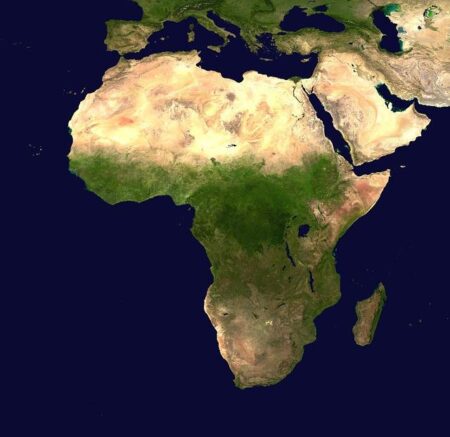
The projection bias in world maps frequently misrepresents the true scale of African nations, causing significant misunderstanding about the continent’s size and diversity. Most conventional maps use the Mercator projection, which distorts land sizes as they move away from the equator. While this method was designed for navigational purposes, it inflates the sizes of countries like Greenland and diminishes the vast expanse of Africa, leading to a perception that belies the continent’s real geographical and cultural richness. For instance, Africa is home to over 54 countries and a staggering diversity of landscapes and peoples-both of which are crucial in global discussions regarding climate change, resource allocation, and geopolitical strategies.
Countries like Togo are advocating for the adoption of more accurate map representations to counteract the ongoing misconceptions stemming from distorted projections. By utilizing alternative projections, such as the Peters projection or the Winkel Tripel, policymakers and educators can provide a clearer picture of Africa’s dimensions. This adjustment is not merely aesthetic; it has profound implications for international perceptions and aids in fostering a more respectful view of Africa’s role in global affairs. Key stakeholders must consider these factors as they push for representational reform, ensuring that resource allocation and international relations are informed by accurate visual data. The following table illustrates the comparative areas of select countries, emphasizing the misunderstandings stemming from traditional map styles:
| Country | Area (sq km) | Misrepresentation Factor |
|---|---|---|
| Democratic Republic of the Congo | 2,344,858 | Underrepresented |
| Togo | 56,785 | Underrepresented |
| France | 551,695 | Overrepresented |
| Greenland | 2,166,086 | Overrepresented |
Togo’s Initiative for Greater Accuracy in Cartography: A Call for Global Change
In a bold move to correct longstanding misconceptions about Africa’s geographical representation, Togo has initiated a campaign aimed at enhancing the accuracy of cartography. The initiative seeks to address the common issue of distorted map projections that often downplay the continent’s true size and significance. Historically, world maps have utilized the Mercator projection, which, while useful for navigation, exaggerates the scale of regions closer to the poles and shrinks those near the equator. As a result, many global citizens perceive Africa as smaller than it is, despite it being three times the size of Europe. Togo’s call to action emphasizes the need for a global reckoning on how maps are created and presented to reflect a truer representation of the continent.
The significance of this initiative extends beyond aesthetics; it also touches on issues of identity and representation. World leaders, educators, and organizations are encouraged to adopt proper mapping techniques that foster a more comprehensive understanding of global geography. Key recommendations from Togo include:
- Utilizing alternative map projections, such as the Peters or Robinson projections, which better capture the true size of land masses.
- Investing in geospatial education to empower local populations with knowledge about their geographical context.
- Creating awareness campaigns to highlight the importance of accurate mapping in economic and social development.
By challenging the status quo, Togo not only aims to elevate Africa’s visibility but also to inspire a global dialogue on the need for equitable representation in geographical depictions.
Implications for Development and Representation: Why Accurate Mapping Matters for Africa’s Future
The perception of Africa’s size on conventional world maps has profound implications for the continent’s development and representation on the global stage. A distorted view not only minimizes Africa’s vast resources and potential but also influences international policy and investment. Countries like Togo, striving for accurate representation, are advocating for a reevaluation of how the continent is depicted. Inaccurate mapping undermines the reality of Africa’s demographics, economies, and cultures, leading to a pervasive misunderstanding that can affect foreign aid, trade relations, and even tourism. By correcting these visual misrepresentations, African nations can advocate more effectively for their development goals and prioritize sustainable growth strategies that reflect their true size and significance in the global arena.
Moreover, accurate mapping can empower local communities by elevating their visibility and reinforcing their claims for rights and resources. Enhanced representation through accurate cartography can help in addressing issues such as land rights, environmental policy, and resource management. Local governments, NGOs, and international agencies can work collaboratively to create initiatives grounded in reality, based on precise geographical information. Below is a succinct overview of how accurate mapping can benefit various sectors in Africa:
| Sector | Benefit of Accurate Mapping |
|---|---|
| Healthcare | Informs disease management through accurate population projections |
| Education | Identifies regions requiring educational resources and infrastructure |
| Agriculture | Enhances land management by mapping arable lands and resource availability |
| Infrastructure | Guides urban planning and transportation networks for better connectivity |
Concluding Remarks
In conclusion, the portrayal of Africa on world maps has long been a subject of debate and concern, with the continent often displayed in a diminished scale that undermines its true size and significance. Togo’s initiative to challenge this misrepresentation highlights the importance of accurate cartographic practices in fostering a better understanding of Africa’s geography and its diverse cultures. By advocating for a more equitable representation of the continent, Togo aims not only to rectify historical inaccuracies but also to empower African nations in the global discourse on geography and development. As the conversation around map representation continues to evolve, it is imperative for educators, policymakers, and media outlets to recognize the critical role that accurate depictions play in shaping perceptions and promoting a deeper appreciation of Africa’s vastness and potential. The call for change is not merely about aesthetics; it is about equity, visibility, and honoring the continent’s rightful place in the world narrative.